
Introduction
All roof Inspection are subject to stresses and deterioration from the elements and human errors. Regular seasonal inspections and annual professional inspections are key to extending your roof’s life and reducing repair costs. Look for any signs of material damage, moisture intrusion, leaks or sagging when examining the roof. Check the flashing around chimneys, skylights and vents. Make sure the drainage system is clog-free and flowing. Check any signs of mold or mildew or water marks, inside the attic and outside. Regular inspections help spot any changes that can snowball into costly repairs if not addressed timely.
Roof Inspections 101: What to Look For During the Process
Do you know that even the best roofing materials and systems can not be expected to reach their full lifespan without regular inspections and care? If you have been neglecting your roof maintenance, the silent water damage can wreak havoc on your whole structure and may lead to premature roof failure. Understanding the importance of regular roof inspections and maintenance helps in taking proactive steps to ensure roof health and longevity.
| Did you know? Insurance claims benefit from documented roof inspections and repairs. You may end up getting lower premiums if a detailed, recorded roof maintenance history is provided. |
Here is a homeowner’s guide to roof inspections.
- Look for any Signs of Material Damage
Look for any signs of warped, cracked or missing shingles when examining your roof. Even one missing tile is enough to cause rot and structural damage within months.
- Check the Gutters and Downspouts
Look for excessive granule loss in the gutters. Make sure your gutters are not clogged due to debris, leaves or twigs. A healthy drainage system helps regulate internal temperatures and improves a home’s energy efficiency.
| Important factThe National Roofing Contractors Association (NRCA) prohibits the use of any maintenance coatings, sprays or other products without consulting a certified roofer. |
- Look for Leaks or Pooling Water
Look for any signs of leaks or pooling water, especially around the valleys and on the flat roofs. See if there are water marks, peeling or bubbling paint and fading inside your home, in the walls, ceilings or attic.
Water can travel a long distance before appearing as leaks inside your structure. To determine the exact point of entry, schedule professional inspections without delay if you spot any signs of seepage or intrusion.
- Examine the Flashing and Vents
Check the flashing around chimneys, skylights, vents and all intrusions. If you notice any seal deterioration, reapply sealants after cleaning and drying the area to waterproof your structure.
- Check for Moss or Mold Presence
Look for any signs of mold or mildew on your roof and inside the attic. Moss on your roof accumulates moisture and makes fertile ground for mold growth and surface deterioration.
- Note any Signs of Sagging
From the ground level, look for any signs of unevenness or roof sagging. Schedule a professional inspection without delay in case you notice a sagging section to prevent the danger of structural collapse.
- Look For Any Signs of Pest Infestations
A compromised roof and clogged gutters make your roof attractive to pests. If you spot any signs of pest infestation on your roof, it’s a telltale sign that your underlayment and insulation have been damaged as well. Contact a roofing service to determine the extent of the damage.
| Types of Roof Inspections | Best For |
| Visual inspection | After the storm to spot any signs of leaks or material damage. |
| Drone inspections | Aerial imagery helps identify weak areas in complex roof designs and hard-to-reach commercial roofs. |
| Infrared inspections | Help detect any hidden damage and moisture infiltration. |
| Structural inspections | Are ideal when you notice sagging sections and risk strauctural collapse |
| Annual Maintenance Inspections | Helps keep your roof in top-notch condition, reduces repair cost and is good for insurance claims. |

Conclusion
Regular, seasonal roof inspections help identify any weak areas and prevent minor problems from escalating into a massive repair bill. A documented roof maintenance and inspection history helps homeowners navigate the complex claims process easily and successfully. Schedule a roof inspection today, stay current with your roof condition and protect your investment.
Frequently Asked Questions
When to perform roof inspections?
Perform roof inspections every spring and fall and after every storm to spot any changes or signs of roof damage after a harsh weather spell.
How long does a professional roof inspection take?
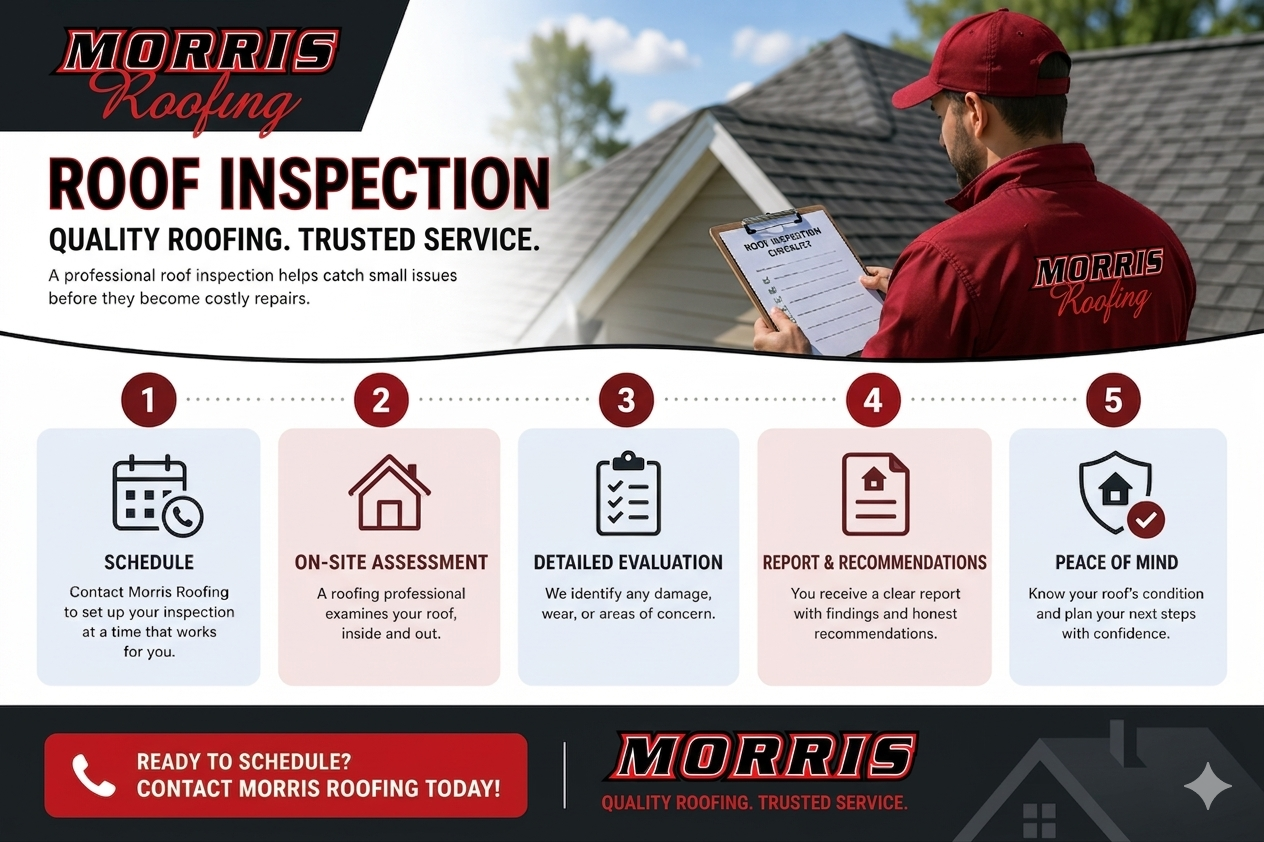
Professional roof inspection may take from 30 minutes to more than an hour, depending on the roof size and design complexity.
How to choose a roofing service for inspections?
Always look for a certified, licensed and insured roofing contractor. Verify their credentials, check their online presence and read online reviews about them. Ask for a detailed written report along with photographic evidence of any signs of roof damage.
What is a roof inspection and why is it important?
A roof inspection is a detailed check of your roof’s condition to identify damage, leaks, or wear. It is important because it helps prevent costly repairs, improves safety, and extends the life of your roof.
How often should I get a roof inspection?
It is recommended to have a roof inspection at least once a year and after major weather events like storms, heavy rain, or hail to ensure there is no hidden damage.
What does a roof inspection include?
A roof inspection typically includes checking shingles, flashing, gutters, roof structure, leaks, water damage, and overall roof integrity.
How long does a roof inspection take?
A professional roof inspection usually takes between 30 minutes to 2 hours, depending on the size and condition of the roof.
Can I do a roof inspection myself?
You can do a basic visual inspection from the ground, but a professional roof inspection is recommended for a complete and safe assessment of potential issues.